
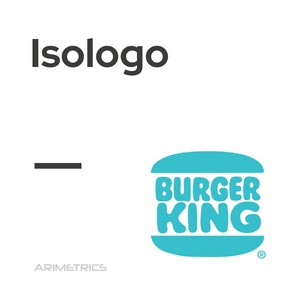
 Definition:
An isologo is a combination of a logo and an isotype, that is, it is a graphic symbol that combines an image (isotype) and a word or letter (logo) to represent a company, product or service in a unique and recognizable way.
Isologues are widely used in advertising, graphic design and corporate communication to identify and promote a specific entity. The combination of image and text in an isologo seeks to create a visual representation that is memorable and effectively communicates the message and values of the brand.
Índice de contenidos
What is the isologo for?
The isologo is a powerful tool for brand identity, as it offers multiple benefits:
- Quick and easy identification: By combining the visual impact of an isotype with the clarity of a logo, an isologo allows consumers to quickly identify a company or product.
- Reinforcement of brand identity: A well-designed isologo ensures that the brand’s message and values are conveyed clearly and consistently, helping to build a solid and reliable image.
- Versatility in communication: Due to their combined nature, isologos are versatile and can be adapted to various formats and media, from print to digital, always maintaining visual coherence.
Key elements of an isologo
For an isologo to be effective, it must incorporate certain key elements:
- Simplicity: A simple design ensures that the logo is easily recognizable and memorable, avoiding excessive and distracting details.
- Relevance: The visual and textual elements of the logo must be relevant and adequately reflect the essence and values of the brand.
- Scalability: A good isologo must be scalable, i.e., maintain its clarity and detail in both large and small sizes, for use in different applications.
Differences between isologotype, logotype and isotype
It is important to distinguish between the different terms related to visual identity:
- Logo: It refers only to the typographic design of the brand name. It is pure text, without additional graphic elements.
- Isotype: A graphic symbol or icon that represents the brand without including text. A classic example would be the Nike swoosh.
- Isologotype: As mentioned above, it is the combination of logotype and isotype in a single inseparable element.
Applications of isologos
Isologs are used in a wide variety of contexts and media, such as:
- Advertising: They are used in advertisements to capture the public’s attention and enhance the brand.
- Packaging design: They are used in labels, boxes or packaging to identify and promote products.
- Corporate communication: They are an important element in the corporate communication of a company, providing a coherent and recognizable visual image for the public.
- Website design and social networks: They allow to identify a company and make the brand recognizable on the Internet.
- Signage and store design: These can be used to guide customers and make a brand recognizable at the point of sale.
- Stationery and marketing materials: Business cards, brochures and posters can be used to reinforce brand identity.
Frequently asked questions about Isologo
What is Isologo?
Definition: An isologo is a combination of a logo and an isotype, that is, it is a graphic symbol that combines an image ( isotype ) and a word or letter ( logo ) to represent a company, product or service in a unique and recognizable way. Isologues are widely used in advertising, graphic design and corporate communication to identify and promote a specific entity. In the Arimetrics glossary it is placed in a digital marketing context to clarify its role, uses and practical implications.
What is Isologo used for in digital marketing?
It is used to better analyse an action, tool, channel or behaviour related to acquisition, measurement, communication, sales or user experience. Its value depends on applying it to a concrete decision.
How is Isologo related to a digital strategy?
It is related to digital strategy when it affects objectives, data, content, technology, campaigns or conversion processes. That is why it should be reviewed together with the business context, not as an isolated term.
What should be considered when working with Isologo?
It is advisable to review its definition, context, associated metrics, limitations and possible risks. It is also useful to validate whether the concept has a real impact on performance, user experience or decision-making.